
Luck Run Amok—Part 7
Bells And Tails

More than 150 years ago, the great German mathematician, Carl Friedrich Gauss, developed a new theory of orbital motion for analyzing astronomical measurements. He also collected land-survey data with his invention, the heliotrope, which uses mirrors to reflect sunlight over long distances. His equipment was imperfect and the measurements were imprecise, but Gauss noticed an interesting pattern in his data—even in measurements as different as the location of the dwarf planet Ceres and the heights of hills in the Kingdom of Hanover.
The measurements tended to be scattered symmetrically about what he assumed to be the true value (for example, the true distance or the true height), with a relatively large number of small errors and a small number of large errors. Even more strikingly, the distribution of errors had the very specific shape shown in Figure 1, which is now called the normal distribution (or the Gaussian distribution).
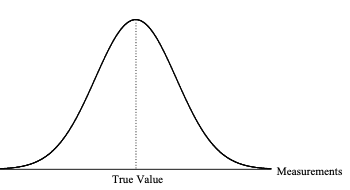
Figure 1 Gauss’ Law of Error
A Belgian named Adolphe Quetelet analyzed very different data—what he called social physics—human dimensions like heights and human actions like criminal behavior. Figure 2, for example, shows the chest measurements of 5,732 Scottish militia, evidently recorded for ordering uniform sizes. While Gauss analyzed repeated measurements scattered around a true value, Quetelet analyzed characteristics that were scattered about an average characteristic. Incredibly, these data, too, have an approximate normal distribution.
